Photographing tall buildings in the city: tips illustrated by the example of FOUR Frankfurt
1. Perspective and location
Choosing the right location is crucial when photographing a tall building. Especially in densely built-up cities, you often have to walk a lot through the streets to find the perfect “gap” between the surrounding buildings. These gaps offer an important advantage: they allow you to show the building in the context of the city.
Parks, elevated locations such as roof terraces or parking garages also offer excellent perspectives. However, it is important not to violate the rights of the owners. Checking information signs or obtaining permission can save trouble later on.
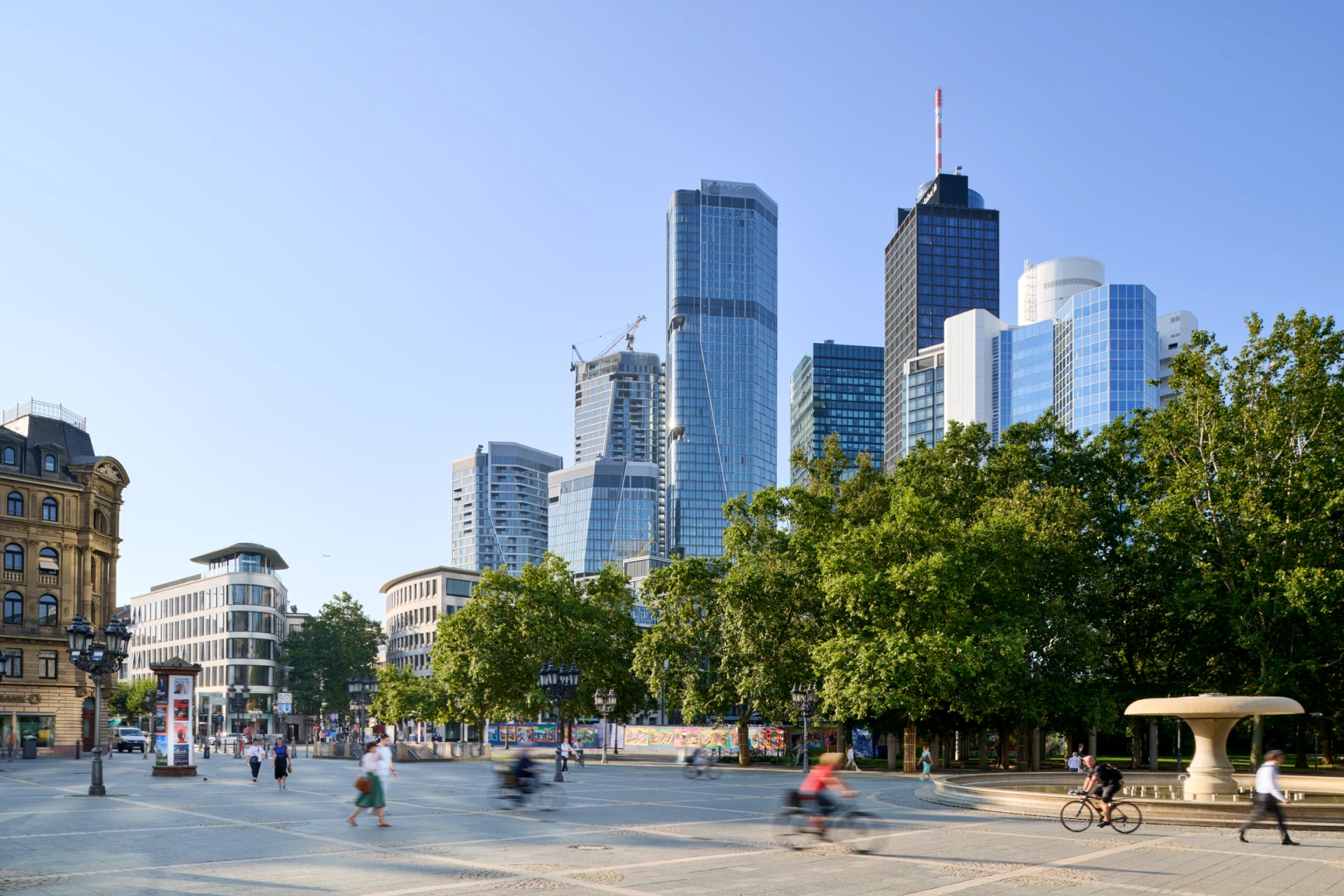
The obvious view from below is very dynamic and suitable for dramatic shots or detailed shots, but it is often less ideal for factual documentation of the building. You should consider what effect you want to achieve: dramatic or documentary. During the photo production of FOUR Frankfurt, it took me many steps to find different perspectives: from the Gallusanlage park to the Opernplatz square to a parking deck. Each position showed different aspects of the building and helped me to get a complete impression.

2. Lens selection and focal length
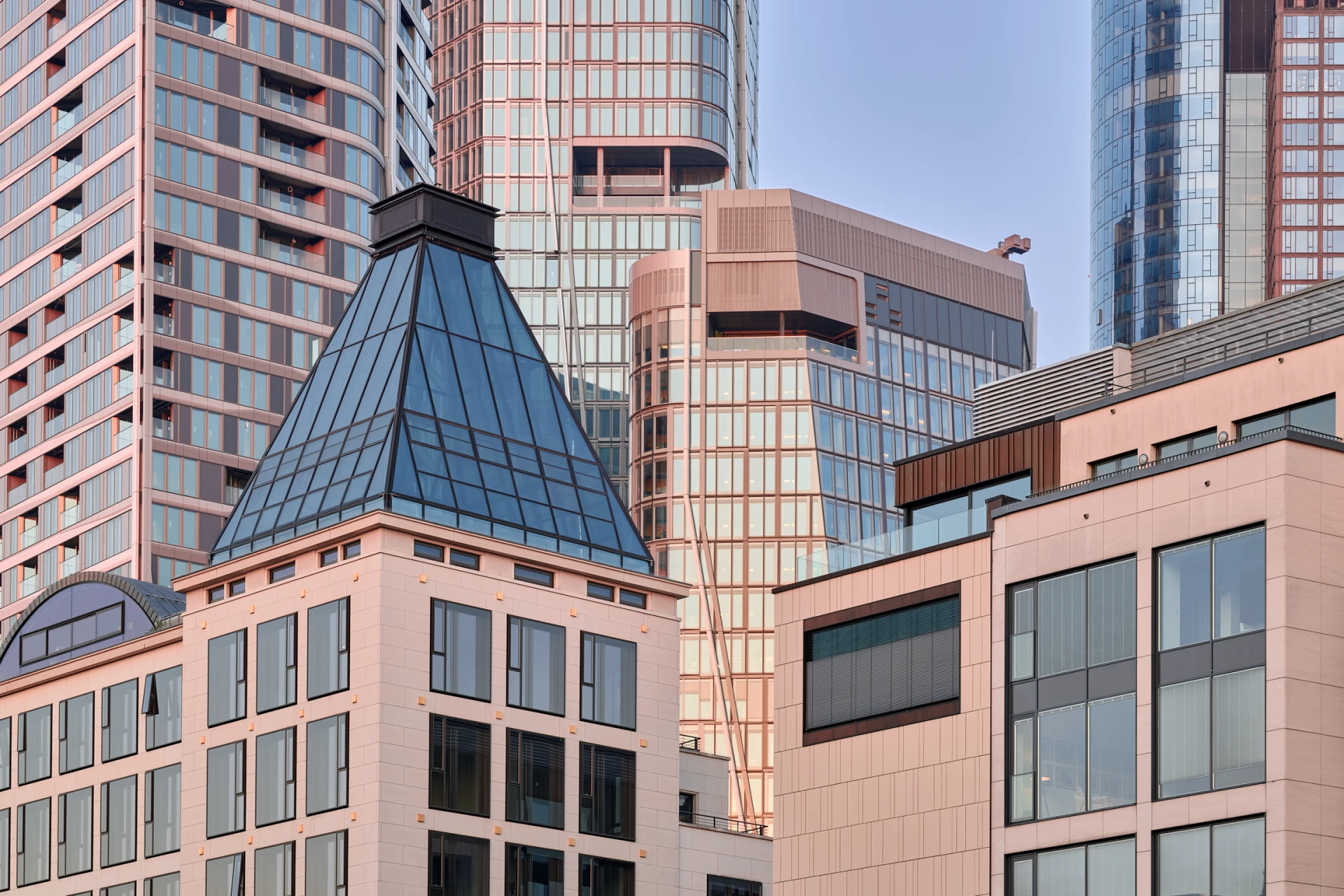
For tall buildings, I usually use wide-angle lenses—often 19 mm or 24 mm. They are particularly well suited for narrow streets and confined urban spaces, as they allow me to capture the entire building in the frame.
I tend to use longer focal lengths as a supplement to emphasize the building more strongly or highlight details and make it stand out from its urban context. However, this usually requires a greater distance, for example, from a distant park, public square, or an elevated position.
In some cases, even an ultra-wide angle is not enough to capture the entire building. Then you have to accept slightly converging lines and correct them digitally later. Tilt-shift lenses offer an elegant solution here: the larger image circle allows you to choose perspectives more freely and avoid converging lines altogether. I work almost always with tilt-shift lenses, as they not only help with line correction, but also allow for more creative freedom in image composition.
3. Light and daytime
Light has a central importance when photographing architecture, especially for creating atmosphere. Warm sunlight or the illumination of a brightly lit glass facade during the blue hour can create a particularly strong impression. The time of day is not only crucial for the mood, but also for planning the shots. In densely built-up cities, surrounding buildings often cast shadows on the facade of the subject, or the sun reflects distractingly on a glass facade. To avoid this effect, good planning is therefore very important. The same applies, even if they are to be used specifically to showcase the building. Facades in particular can be emphasized when light is used deliberately or interesting shadows are created. In a dense city center, the time of day and lighting conditions are particularly important, as the conditions are constantly changing due to the surrounding buildings. Planning apps such as www.shademap.app are helpful for estimating the position of the sun and shadows for specific times and locations in advance.

4. Composition and lines
A clear image composition is essential for showing a building objectively and guiding the viewer's eye without distracting elements. Dramatic converging lines should be avoided if they make the architecture harder to understand.
Symmetries create a calming effect because they give the image a clear and simple structure. They are particularly well suited for depicting the proportions of architecture.
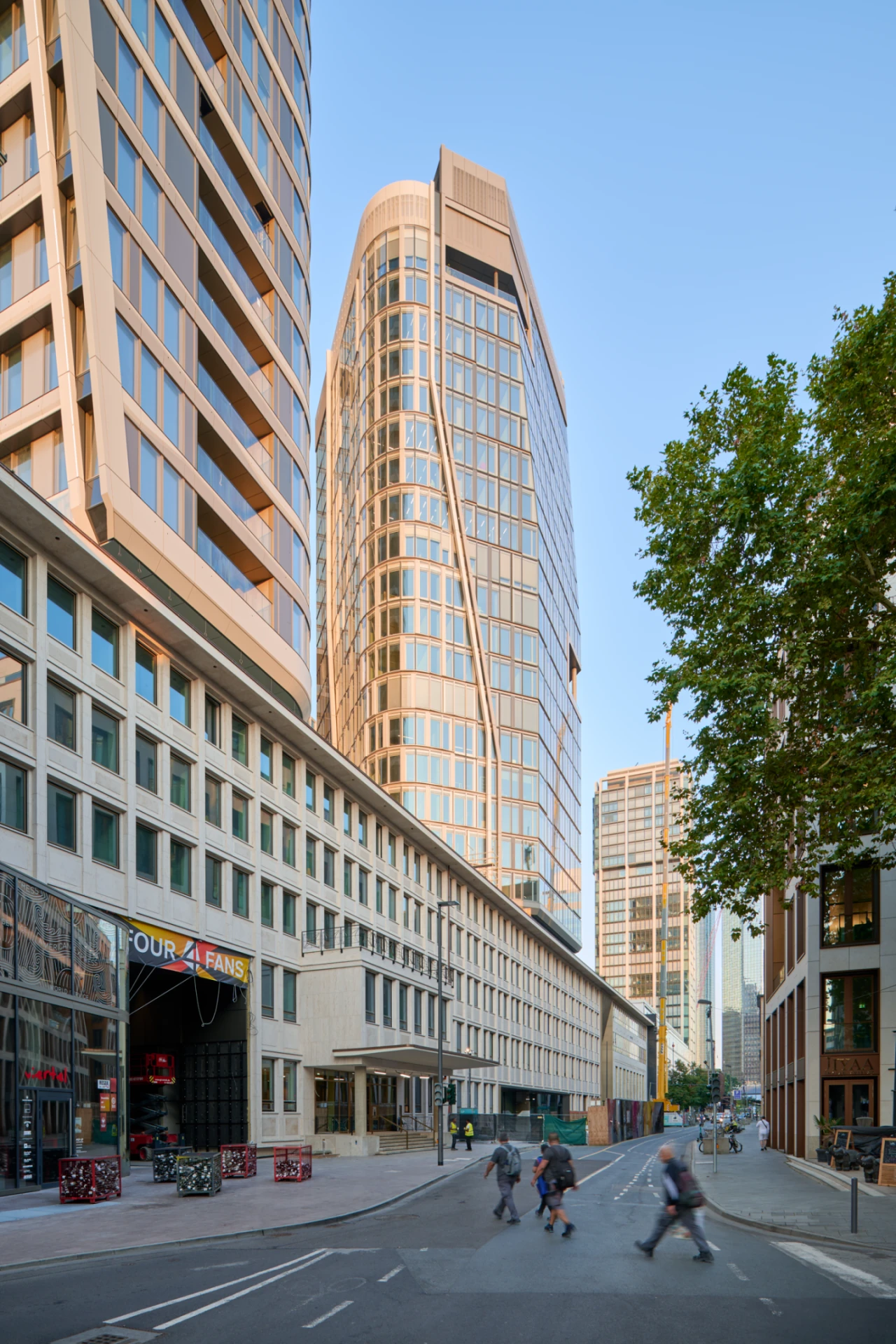
Oblique perspectives and asymmetrical compositions are especially helpful in narrow streets. They make it possible to capture the building dynamically, create interesting lines, and use the limited space creatively without losing architectural clarity.
A special example of an asymmetrical yet calm composition is the golden ratio. The balanced proportions of the image create harmony and balance, giving the image a calm appearance despite its asymmetry.
5. Deal with the circumstances
In the city, there are always elements that influence the image: pedestrians, cars, construction sites, or other temporary objects often cannot be avoided. The key is how you deal with them. You can hide distracting elements, such as construction sites or parked cars, in the composition of the image or place them so that they are less noticeable. Digital post-processing can also help to minimize such distractions.
On the other hand, traffic or passengers can be integrated into the shots in a targeted manner. Blurred silhouettes can add dynamism to the image, illustrate the scale of the building, and further emphasize the urban context. Creativity is particularly important in this phase: if you learn to play with the circumstances and integrate them into the image design, you can turn even unexpected disturbances into added value for the photo.

Conclusion
Tall buildings in the city represent a major photographic challenge. But it is this difficulty that often opens up unexpected perspectives on a building and incorporates the urban environment. The people who move through urban spaces every day can also enrich the effect of images and create additional dimensions. Architectural photography thrives on a conscious engagement with a building and its urban context. The special challenges posed by tall buildings intensify this aspect even further.
With planning, the right equipment, and creative approaches, any building can be photographed effectively. This often results in unique and unexpected motifs that showcase both the architecture and its urban context in an exciting way.