A museum that is a work of art in itself: The Reinhard Ernst Museum
A minimalistic building design that gives room for interpretation
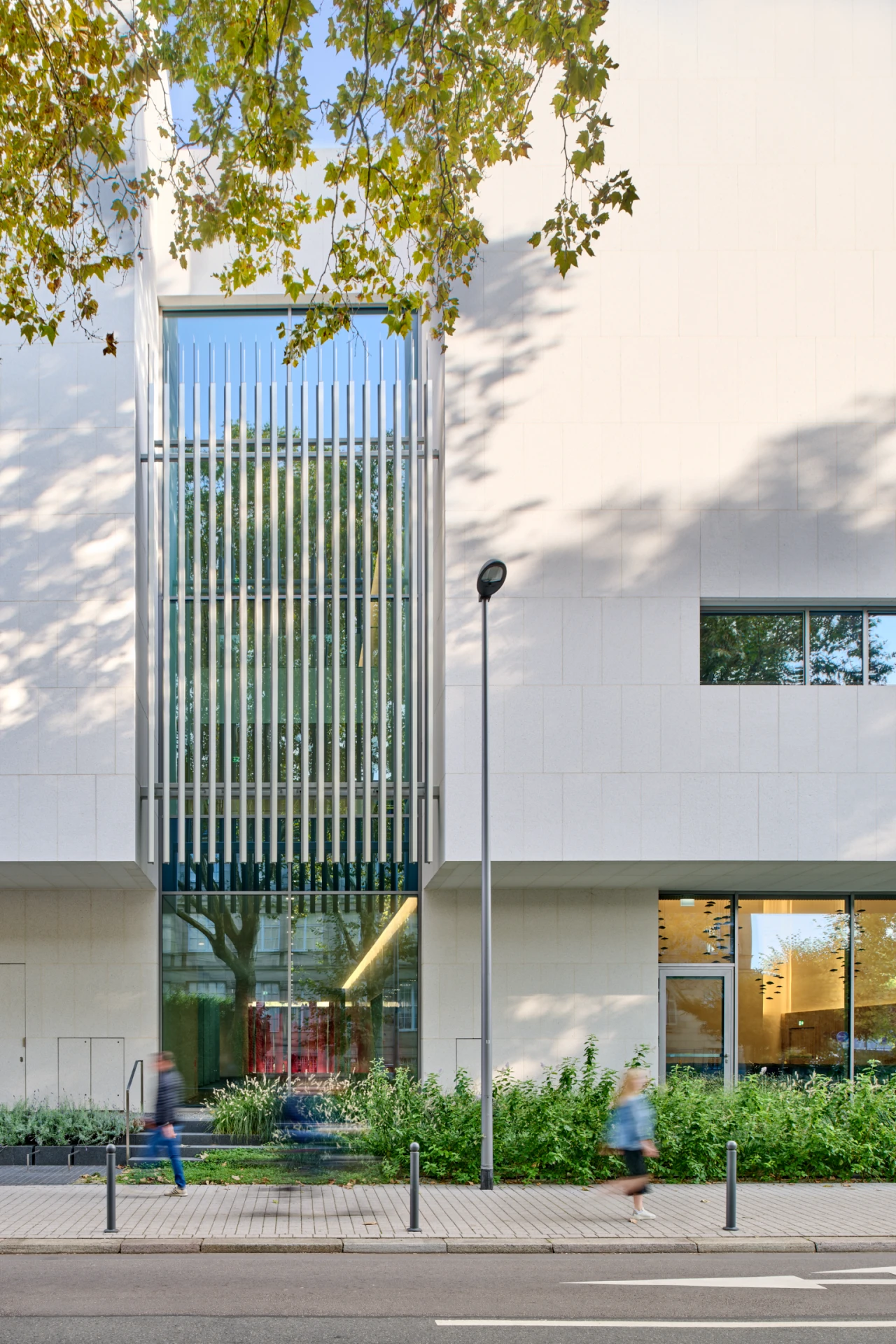
The museum quickly became known as the “Wiesbaden Sugar Cube” among the local community, and this nickname is particularly true in terms of its architecture. The building consists of four segments that come together to form a large rectangular block. Between the segments, the solid façade is interrupted by large glass panels. On the upper floors of the exhibition space, the visible areas are screened by a fence-like metal structure, while the ground floor is completely open to the public. This open design makes the solid structure above appear to float.
Fumihiko Maki’s guiding principle in designing the museum was a spirit of respect. This is expressed, on the one hand, in the building’s minimalist form and, on the other, in its structural alignment with the axes of the adjacent buildings. Nevertheless, the structure has a breathtaking presence that makes it appear like a sculpture.
This presence arises from the contrast between the building’s clear and compact design and its simultaneous openness. At first glance, the museum appears very massive and stands out from the surrounding buildings. Upon closer viewing, however, this impression dissipates, and the structure that previously seemed massive becomes as light as a feather. Inside, this impression continues, giving the exhibited art the space it needs to unfold.

A facade like a white canvas, an interior full of colorful imagination
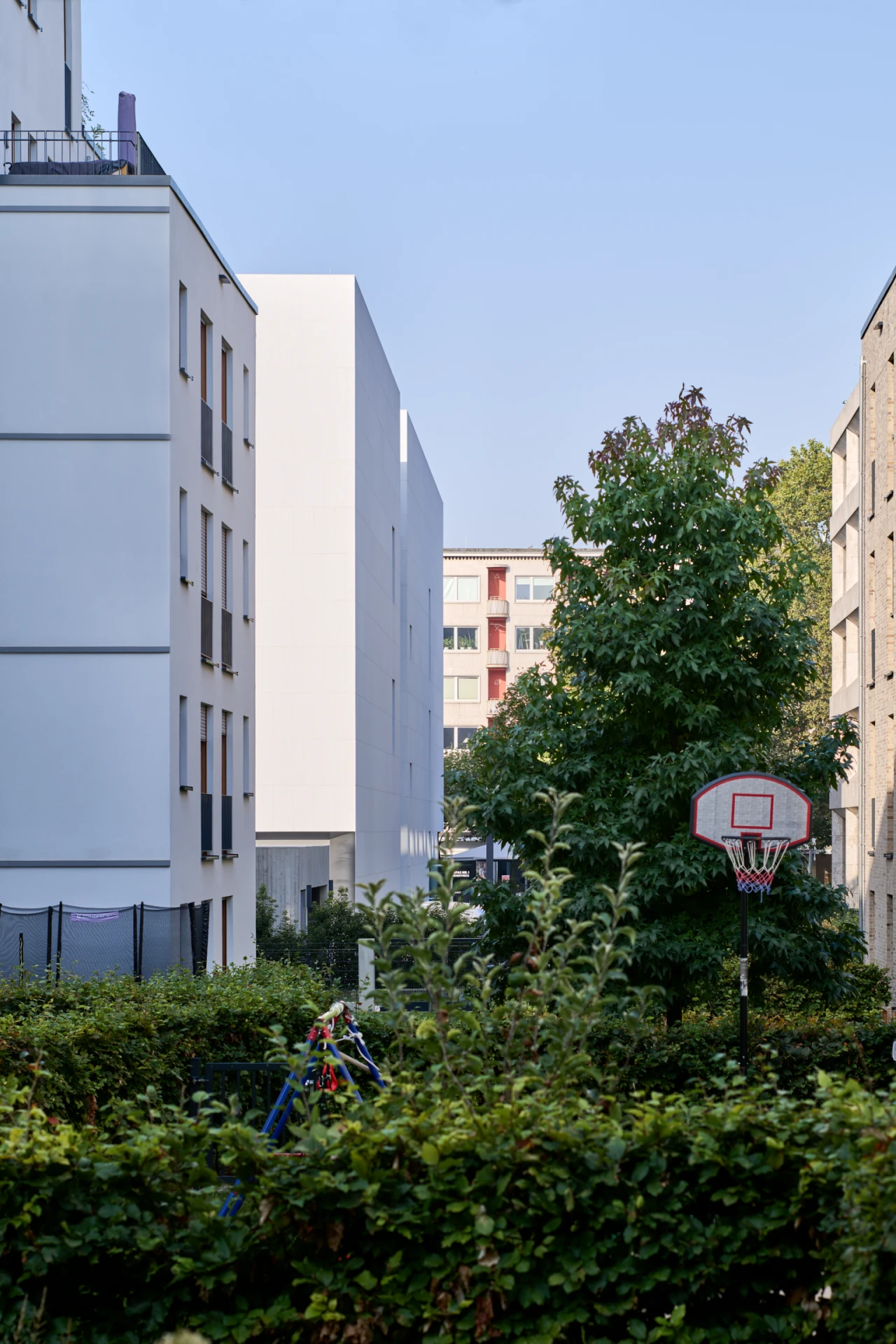
The design of the façade also demonstrates how the architectural concept goes beyond the building’s mere function. In the classical Japanese tradition, the building is not understood as having an interior and an exterior, but rather as a fluid, interconnected structure. The sparkling white granite slabs not only surround the art but also connect directly with it within the interior space. Yet, in their neutral white, they leave the stage to the art to captivate visitors.
However, the bright white of the façade is not merely symbolic, serving as a canvas that contrasts with the colorful exhibits inside. Viewed from the outside, it creates a striking contrast and sets the museum apart from the surrounding buildings. The glittering, crystalline texture of the granite adds extra radiance and guides visitors from a distance. This is likely also the source of the association with a sugar cube. A fitting title for this monumental architectural sculpture.
A courtyard as an anchor and a space for reflection
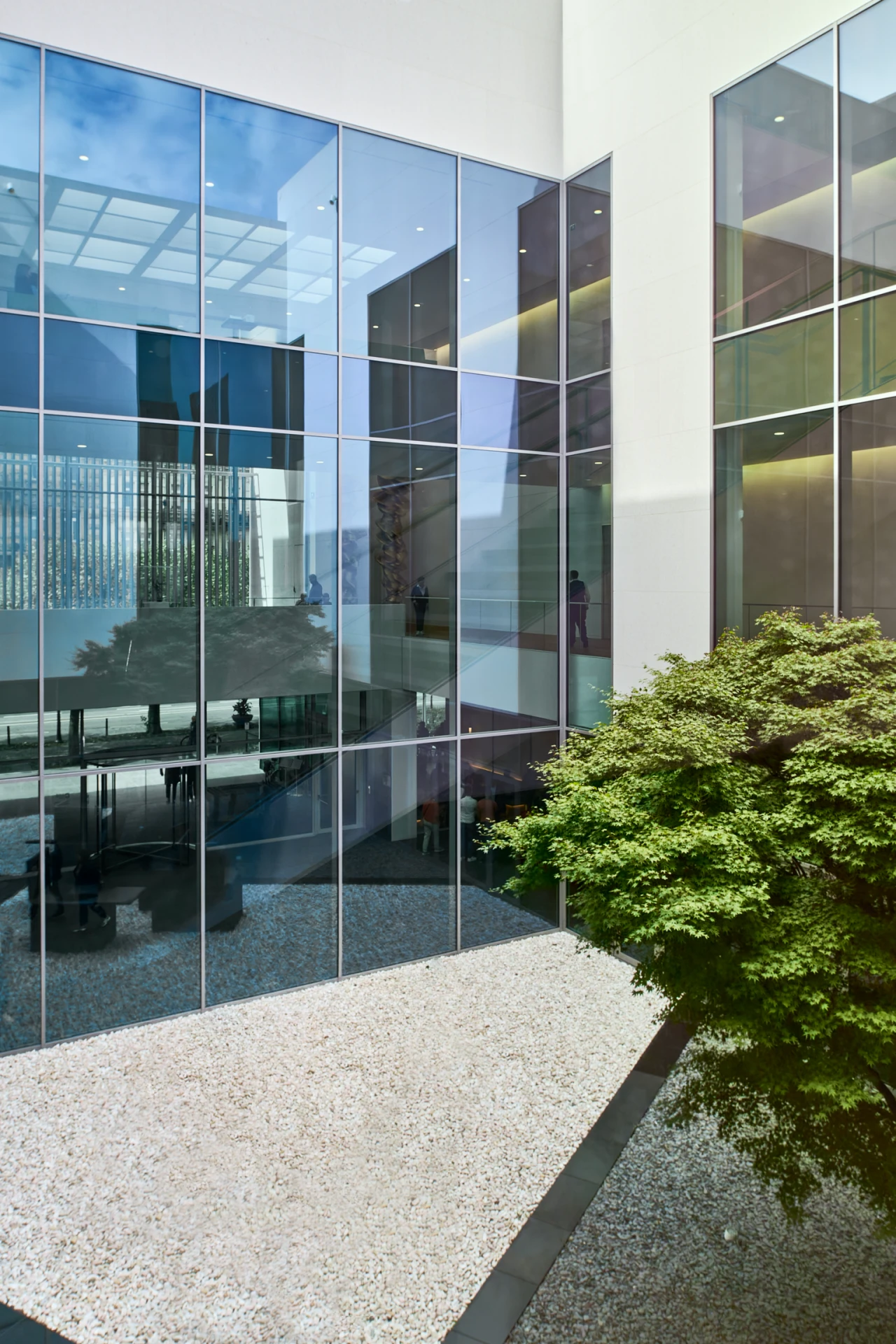
While the museum’s design and the art on display challenge and inspire visitors, the central, light-filled courtyard provides a place of relaxation. It is the heart of the building and the space that connects all the exhibition rooms. In its center is a landscaped rock garden featuring a Japanese maple and an iron sculpture by Eduardo Chillida. Contemplating the artistic arrangement on the ground creates a meditative atmosphere. Here, visitors can take a break, sit down, and let the open architecture impress them. In contrast to the museum’s massive and expressive exterior, the open and fluid interior design appears almost light and understated.
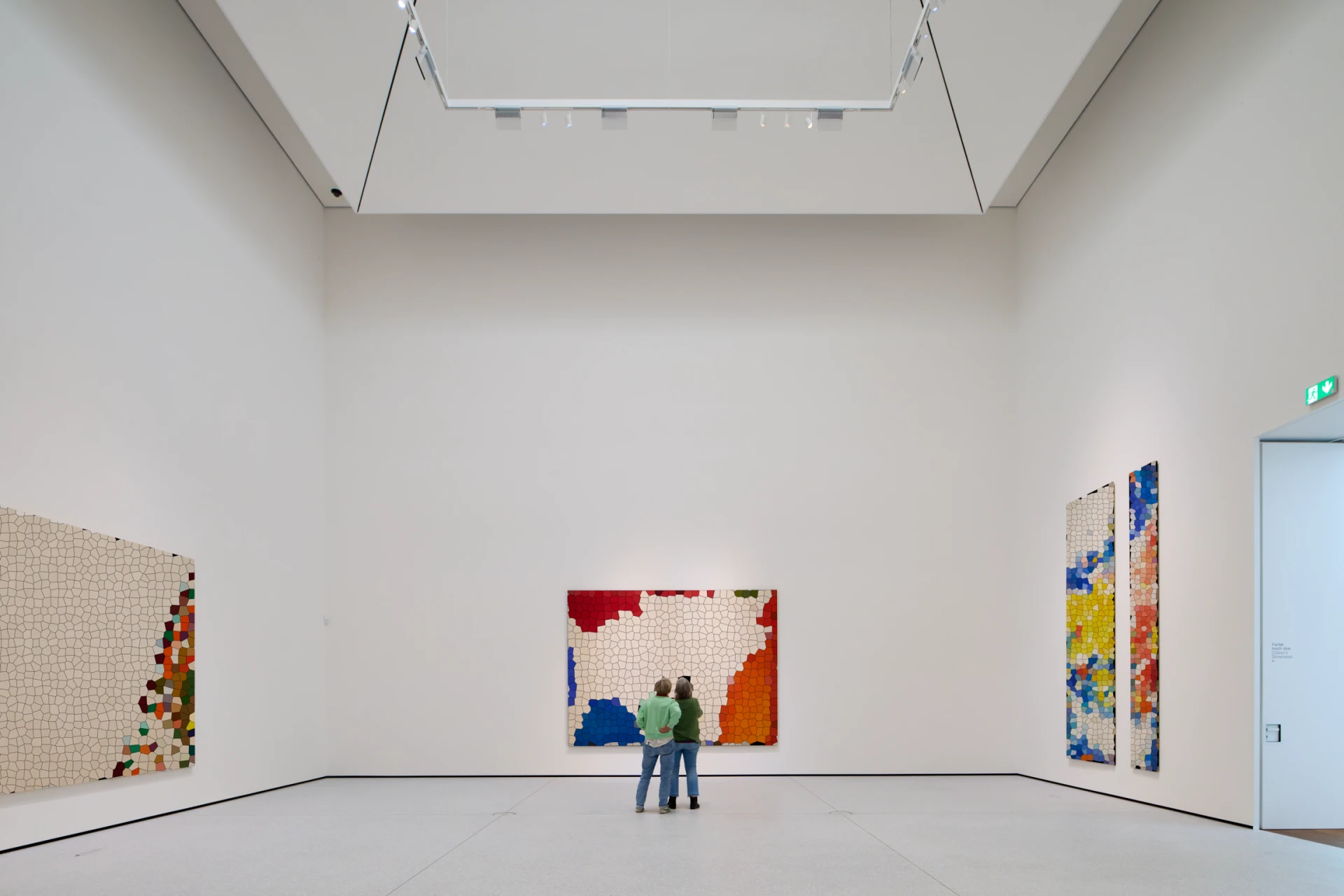
Spaces Designed in Dialogue with Art
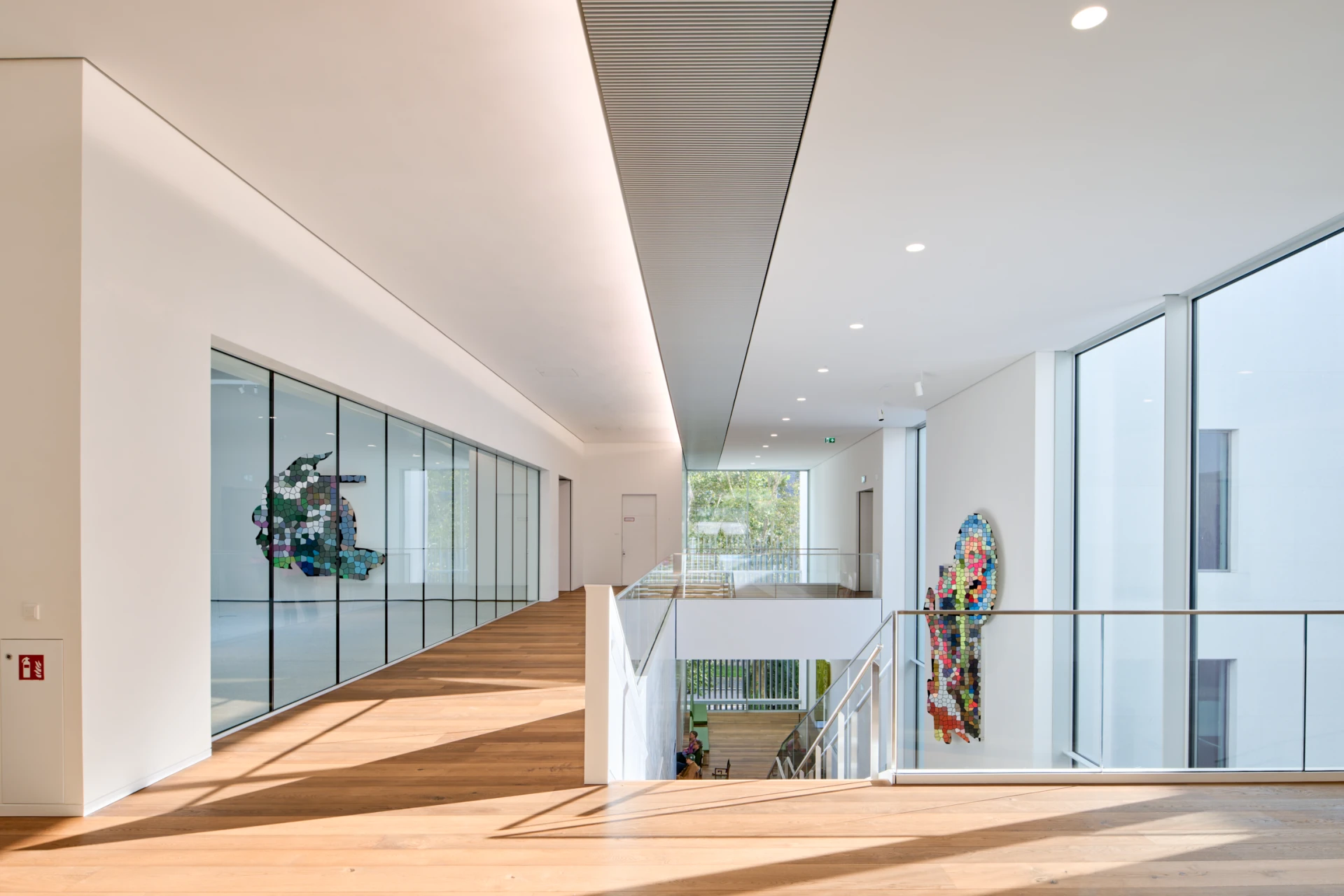
Contrary to the usual process of constructing a museum, Fumihiko Maki’s design was developed in close collaboration with his friend, Reinhard Ernst, after whom the museum is named and who served as its founder. As a result, rather than designing generic exhibition spaces, it was already clear during the planning phase which works of art would be featured in the exhibition.
A good example of this is Tony Cragg’s bronze sculpture “Pair,” which stands over 6 meters tall and was installed at its planned location even during the construction phase. Another telling example is the so-called “Aquarium” exhibition space, which houses a series of Frank Stella’s wall sculptures from the “Moby Dick” series. This space, created specifically for these works, is, as the name suggests, open to view through a glass wall. In addition, there are many other areas in the museum where the architecture deliberately creates spaces that provide art with a stage that is more than just a plain white wall.
Architecture at the Intersection of Location and Position
The Reinhard Ernst Museum is more than just a museum in the traditional meaning of the word. It is a place that showcases abstract art through interesting exhibition formats and, at the same time, draws people from far away who come just to see the architecture. Thanks to its unique design, this impressive structure by Fumihiko Maki is equally a place and an object of artistic interest. Its design evokes contradictory perceptions. At first glance, it appears heavy and massive, yet at the same time open and light. This contrast captivates visitors and makes them pause, as if they were standing in front of a sculpture like the one titled “Pair” inside the museum.